


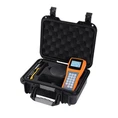
Leeb hardness testers are indispensable tools in various industries, offering a quick and reliable way to measure the hardness of materials. As a leading supplier of Leeb Hardness Tester, I've witnessed firsthand how these devices have become essential in quality control and material assessment across different sectors. In this blog post, I'll explore the industries that commonly use Leeb hardness testers and the reasons behind their widespread adoption.
Manufacturing Industry
The manufacturing industry is one of the primary users of Leeb hardness testers. In manufacturing processes, ensuring the hardness of materials is crucial for maintaining product quality and durability. Whether it's metal fabrication, automotive manufacturing, or machinery production, Leeb hardness testers play a vital role in quality control.
For example, in the automotive industry, various components such as engine parts, gears, and axles need to meet specific hardness requirements. Leeb hardness testers allow manufacturers to quickly verify the hardness of these components during the production process. This helps in identifying any potential issues early on, such as improper heat treatment or the use of sub - standard materials. By using Portable Leeb Hardness Tester, manufacturers can test parts in situ, without the need to transport them to a laboratory, which saves time and reduces production delays.
In metal fabrication, Leeb hardness testing is used to assess the hardness of raw materials, such as steel bars and sheets, before they are processed into finished products. It also helps in evaluating the hardness of welded joints, which is critical for the structural integrity of fabricated metal structures. A proper hardness test can ensure that the welding process has not caused any detrimental changes in the material's properties.
Aerospace Industry
The aerospace industry demands the highest levels of quality and reliability in all its components. Leeb hardness testers are widely used in this industry to ensure the materials used in aircraft and spacecraft meet strict safety and performance standards.
Aerospace components, such as turbine blades, landing gear, and structural frames, are subjected to extreme conditions, including high temperatures, pressures, and mechanical stresses. Therefore, the hardness of these materials must be precisely controlled. Leeb hardness testing helps in verifying the material properties of critical components during the manufacturing process and throughout their service life.
For instance, when testing turbine blades made from advanced superalloys, a Leeb hardness tester can quickly determine if the blades have the appropriate hardness to withstand the high - speed rotation and thermal cycling they experience. Regular hardness testing of aerospace materials can also detect early signs of material degradation, such as stress corrosion cracking or creep, which can lead to catastrophic failures if left undetected.
Energy Industry
The energy industry, including oil and gas, nuclear, and renewable energy sectors, also relies heavily on Leeb hardness testers. In the oil and gas industry, pipelines, storage tanks, and drilling equipment are exposed to harsh environments, including corrosive fluids and high - pressure conditions.
Leeb hardness testing is used to assess the integrity of these structures. For example, when inspecting pipelines, hardness testing can help identify areas of potential corrosion or mechanical damage. A change in hardness can indicate that the material has been weakened, which may lead to leaks or failures. By using Leeb Hardness Tester, inspectors can quickly scan large sections of pipelines for hardness variations, allowing for timely maintenance and repair.
In the nuclear industry, where safety is of utmost importance, Leeb hardness testing is used to monitor the degradation of reactor components over time. Components such as reactor vessels and fuel rods need to maintain their hardness properties to ensure safe and efficient operation. Regular hardness testing helps in detecting any changes in the material's structure due to radiation exposure or thermal cycling.
In the renewable energy sector, particularly in wind turbine manufacturing, Leeb hardness testers are used to test the hardness of various components, such as gearboxes, shafts, and blades. These components need to be hard enough to withstand the long - term mechanical stresses and environmental conditions they are exposed to.
Construction Industry
In the construction industry, Leeb hardness testers are used for quality control of building materials. Concrete, for example, is one of the most widely used construction materials, and its hardness is an important indicator of its strength and durability.
Leeb hardness testing can be used during the production of pre - cast concrete elements to ensure they meet the specified hardness requirements. On construction sites, it can be used to test the hardness of in - situ concrete structures, such as foundations, columns, and beams. This helps in determining if the concrete has reached its design strength and if any corrective actions are needed.
In addition to concrete, Leeb hardness testers can also be used to test the hardness of steel reinforcement bars, which are essential for the structural integrity of concrete structures. By ensuring the proper hardness of these bars, the overall safety and durability of the building can be enhanced.
Metallurgical Industry
The metallurgical industry, which is involved in the production and processing of metals, is a major user of Leeb hardness testers. In metal smelting and refining processes, the hardness of metals is closely related to their chemical composition and processing conditions.
Leeb hardness testing is used to monitor the quality of metals during production. For example, in the steelmaking process, hardness testing can help determine if the steel has been properly heat - treated. Different heat - treatment processes, such as annealing, quenching, and tempering, can significantly affect the hardness of steel. By using a Leeb Hardness Tester, metallurgists can quickly assess the effectiveness of the heat - treatment process and make adjustments if necessary.
Moreover, in the production of non - ferrous metals, such as aluminum and copper, Leeb hardness testing is used to ensure the consistency of material properties. This is important for applications where the performance of these metals is critical, such as in electrical wiring and automotive parts.
Other Related Instruments
While Leeb hardness testers are widely used, there are other types of hardness testers available for different applications. The Shore Hardness Tester is commonly used to measure the hardness of rubber, plastics, and other soft materials. It works by indenting the material with a spring - loaded indenter and measuring the depth of penetration.
The Digital Display Shore Hardness Tester provides a more accurate and convenient way to measure the hardness of soft materials. It offers a digital readout of the hardness value, which is easier to read and record compared to traditional analog testers.
The Ultrasonic Hardness Tester is another type of hardness testing instrument. It uses the ultrasonic contact impedance method to measure the hardness of materials. This method is particularly useful for testing small or thin - walled parts, as it causes minimal damage to the test piece.
Conclusion
Leeb hardness testers are versatile and essential tools in many industries. From manufacturing and aerospace to energy, construction, and metallurgy, these testers play a crucial role in ensuring the quality, safety, and performance of materials and products. As a supplier of Leeb hardness testers, I understand the importance of providing reliable and accurate testing solutions to meet the diverse needs of different industries.


If you are in an industry that requires hardness testing and are looking for a high - quality Leeb hardness tester, I invite you to contact me for a detailed discussion. We can explore how our products can best fit your specific requirements and help you improve your quality control processes.
References
[1] ASTM International. "Standard Test Methods for Leeb Hardness Testing of Metals". ASTM E140-12, 2012.
[2] European Committee for Standardization. "Metallic materials - Leeb hardness test - Part 1: Test method". EN ISO 16859 - 1:2015, 2015.
[3] Callister, W. D., & Rethwisch, D. G. "Materials Science and Engineering: An Introduction". Wiley, 2012.