


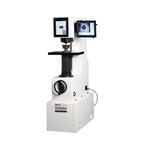


Ensuring Material Quality with Brinell Hardness Tester in Manufacturing
In the manufacturing sector, material quality directly impacts product performance, durability, and safety. Whether producing automotive components, structural steel, or heavy machinery parts, manufacturers must verify that raw materials and finished products meet stringent quality standards. The Brinell hardness tester has emerged as one of the most reliable instruments for this purpose, particularly when working with large, coarse-grained, or non-homogeneous materials. This guide explores how Brinell hardness testing supports material quality control across various manufacturing industries, highlighting its applications, benefits, and practical considerations.
Why Hardness Testing is Crucial for Manufacturing
Hardness-a material's resistance to permanent indentation, wear, and deformation-is a key mechanical property that correlates strongly with tensile strength, wear resistance, and fatigue life. For manufacturers, hardness testing serves several critical functions:
- Incoming Material Verification: Confirming that raw materials meet purchase specifications before they enter production.
- Process Control: Monitoring heat treatment effectiveness and detecting process deviations in real time.
- Final Product Validation: Ensuring finished components possess the required hardness for safe, long-term service.
- Failure Analysis: Investigating why a component failed and whether material properties contributed to the failure.
Traditional methods such as Rockwell or Vickers hardness testing can be less effective when applied to large castings, forgings, or coarse-grained metals, where small indentations may not capture the material's true bulk properties. The Brinell hardness test overcomes this limitation by using a large spherical indenter and high test forces, producing an indentation that averages hardness over a broader area.
Working Principle of the Brinell Hardness Tester
Understanding the basic principle of the Brinell hardness test helps clarify why it is particularly suitable for manufacturing quality control applications.
The test uses a tungsten carbide ball indenter of specified diameter-commonly 1 mm, 2.5 mm, 5 mm, or 10 mm-pressed into the material surface under a defined test force for a specified dwell time. After the force is removed, the diameter of the resulting indentation is measured optically, typically in at least two perpendicular directions. The Brinell hardness value (HBW) is then calculated based on the applied test force and the curved surface area of the indentation. Because the indentation covers a relatively large area, the result effectively averages the material's response across multiple grains and microstructural features, making the Brinell method particularly suitable for materials with coarse or non-uniform grain structures.
The designation HBW indicates that a tungsten carbide ball indenter was used, as required by modern international standards (ISO 6506, ASTM E10).
Key Applications of Brinell Hardness Testing in Manufacturing
Metal Production
In steel mills and foundries, the Brinell hardness tester is an indispensable tool for verifying the hardness of raw materials. Hot-rolled plates, structural sections, cast ingots, and quenched-and-tempered steel products must meet specified hardness ranges to ensure consistent mechanical properties. Brinell testing provides a practical, efficient means of assessing these materials directly on the production line, without requiring extensive sample preparation. For castings-where coarse grain structures can cause erratic readings with other methods-the Brinell test is particularly valuable because its large indentation area minimizes the influence of local microstructural variations.
Automotive Component Manufacturing
The automotive industry demands high strength and wear resistance from critical components such as engine blocks, transmission housings, gears, shafts, and suspension parts. Many of these components are produced as forgings or castings, materials for which the Brinell hardness test is ideally suited. By integrating Brinell hardness testing into their quality control processes, automotive manufacturers can ensure that each component meets the hardness specifications required for long-term durability under demanding operating conditions.
Aerospace Component Testing
Aerospace applications impose even more stringent requirements on material properties. Components such as landing gear parts, turbine blades, and structural fasteners must withstand extreme stresses while maintaining dimensional stability and fatigue resistance. Brinell hardness testing is widely used in aerospace manufacturing to assess the hardness of large structural components and to verify the effectiveness of heat treatment processes. The method's ability to provide representative hardness values for coarse-grained materials is particularly valuable when working with high-strength alloys and forgings.
Heavy Machinery and Equipment Manufacturing
Manufacturers of heavy machinery-including excavators, cranes, bulldozers, and mining equipment-rely on Brinell hardness testing to verify the quality of large structural components such as booms, buckets, frames, and gear blanks. These components are often too large for benchtop testers, making portable Brinell hardness testers an essential tool for on-site inspection. The method's tolerance for rough surfaces and its reliability on coarse-grained materials make it the preferred choice for heavy equipment manufacturing environments.
Welded Structure Inspection and Heat Treatment Verification
In addition to component testing, Brinell hardness testers are used to inspect welded joints and heat-affected zones in fabricated structures. Hardness variations across a weld can indicate improper welding parameters, inadequate pre-heat or post-weld heat treatment, or the presence of undesirable microstructures such as martensite in steel welds. Regular Brinell hardness testing helps detect these issues early, preventing weld failures in service.
Furthermore, Brinell hardness testing plays an essential role in validating heat treatment processes. Whether verifying that a quenched component has achieved the desired hardness or ensuring that a tempered component has been softened to the correct level, the Brinell method provides reliable, quantitative data that supports process optimization.
Benefits of Using a Brinell Hardness Tester in Manufacturing Environments
Accurate Measurement for Large and Coarse Components
One of the defining advantages of the Brinell hardness test is its ability to deliver accurate hardness values for large components where other methods might fail. The large spherical indenter and high test forces generate an indentation that is representative of the material's bulk properties, minimizing the influence of localized variations such as porosity, segregation, or coarse grain boundaries.
Reliable Results for Coarse-Grained and Heterogeneous Materials
Materials with coarse or non-uniform microstructures-such as cast iron, cast steel, and many forgings-pose significant challenges for hardness testing methods that rely on small indentations. The Brinell method overcomes this challenge by averaging the hardness over a much larger area, providing results that are both accurate and repeatable.
Efficiency in Large-Scale Material Testing
Modern Brinell hardness testers-particularly digital and automatic models-offer efficient workflows suitable for high-volume manufacturing environments. Automated test cycles, integrated digital imaging for indentation measurement, and data export capabilities significantly reduce testing time per sample compared to manual methods. For production lines where hundreds of components require hardness verification daily, this efficiency translates directly into lower cost per test and improved throughput.
Improved Traceability and Data Management
Digital Brinell hardness testers automatically record test results along with essential metadata (test force, indenter size, dwell time, date, operator ID), supporting comprehensive traceability for quality management systems. Results can be exported to manufacturing execution systems or enterprise resource planning platforms, enabling real-time quality monitoring and facilitating compliance with standards such as ISO 6506 and ASTM E10.
Practical Considerations for Manufacturing Applications
Test Force and Indenter Selection
Selecting the appropriate combination of test force and ball diameter is critical for obtaining valid, comparable results. For steel and cast iron, the combination of a 10 mm ball with a 3000 kgf load (F/D² = 30) is standard. For softer materials such as aluminum or copper alloys, lower test forces (e.g., 500 kgf or 250 kgf with a 10 mm ball) are more appropriate. The relationship between the test force and the square of the ball diameter, defined by geometric similarity principles, ensures comparable hardness values across different test conditions.
Sample Thickness Requirements
To obtain valid Brinell hardness results, the test specimen must be sufficiently thick to prevent the indentation from being influenced by the anvil supporting the specimen. According to ISO 6506, the specimen thickness should be at least eight times the expected indentation depth.
Surface Preparation
While the Brinell method is more tolerant of surface irregularities than Vickers or Knoop testing, proper surface preparation remains important. The test surface must be clean and flat, free from oil, scale, or other contaminants that could interfere with indentation measurement. For most manufacturing applications, light grinding or machining is sufficient to prepare the surface for testing.
Common Buyer Mistakes to Avoid
Selecting the Wrong Test Force
A common mistake is using a test force that is either too high or too low for the material being tested. Excessive force may cause indenter damage or produce indentations that violate geometric similarity requirements, while insufficient force may fail to produce a measurable indentation.
Neglecting Calibration and Verification
Every Brinell hardness tester requires regular calibration using certified reference hardness blocks traceable to national or international standards. Daily verification is recommended for high-volume production environments where the instrument is in continuous use.
Overlooking the Need for Digital Capabilities
For manufacturers with high testing volumes or strict data traceability requirements, manual Brinell testers may be insufficient. Digital models with integrated imaging and data export capabilities provide significant advantages in efficiency, accuracy, and compliance.
Frequently Asked Questions
Q1: Can a Brinell hardness tester be used on thin materials?
The Brinell test is more suitable for thick materials such as steel plates and castings. For thin materials, the relatively deep indentation may penetrate through the specimen or be influenced by the supporting anvil. Other methods, such as Rockwell superficial or Vickers microhardness testing, are generally more appropriate for thin components.
Q2: How does Brinell hardness testing improve production quality?
By verifying that raw materials and finished components meet the hardness specifications required for durability, Brinell testing helps manufacturers detect quality issues early in the production process. This prevents defective components from progressing to later manufacturing stages or reaching end customers, reducing scrap, rework, and warranty claims.
Q3: How long does a typical Brinell hardness test take?
Including surface preparation, load application, dwell time, and optical measurement, a single Brinell test typically takes a few minutes. Automatic testers with integrated digital imaging can significantly reduce this time, particularly for high-volume testing.
Q4: What standards govern Brinell hardness testing?
The two most widely recognized standards for Brinell hardness testing are ASTM E10 (predominantly used in North America) and ISO 6506 (international standard). Both standards define requirements for test forces, indenter geometry, dwell times, spacing between indentations, calibration procedures, and verification methods. When selecting a Brinell hardness tester, verifying compliance with the standards relevant to your industry and geographic region is essential.
Q5: What is the difference between HBW and HBS?
HBW indicates that a tungsten carbide ball indenter was used for the test. HBS indicates a hardened steel ball. Modern international standards (ISO 6506, ASTM E10) require the use of tungsten carbide balls, particularly for materials with expected hardness exceeding 350 HBW, as steel balls may deform under high loads and produce inaccurate results.
Conclusion
The Brinell hardness tester plays an essential role in ensuring material quality across a wide range of manufacturing industries. From incoming material verification in steel mills and foundries to component testing in automotive and aerospace manufacturing, the method's ability to provide accurate, representative hardness values for large, coarse-grained, and heterogeneous materials makes it an indispensable tool for quality control professionals. By selecting the appropriate test parameters, following standardized procedures, and maintaining regular calibration, manufacturers can leverage the full potential of Brinell hardness testing to improve product quality, reduce manufacturing costs, and enhance customer satisfaction.
