


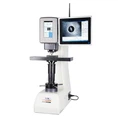


When it comes to the world of material testing, Automatic Brinell Hardness Testers play a crucial role. These testers are designed to measure the hardness of materials, which is a fundamental characteristic that can significantly impact the performance and quality of various products. As a supplier of Automatic Brinell Hardness Testers, I am often asked about the price range of these instruments. In this blog post, I will delve into the factors that influence the price of Automatic Brinell Hardness Testers and provide an overview of the typical price ranges.
Factors Affecting the Price of Automatic Brinell Hardness Testers
1. Testing Capacity and Range
One of the primary factors that determine the price of an Automatic Brinell Hardness Tester is its testing capacity and range. Testers with a higher load capacity and a wider range of hardness measurements tend to be more expensive. For example, a tester that can handle loads up to 3000 kgf and measure a wide range of hardness values will generally cost more than a tester with a lower load capacity and a more limited range.


2. Automation and Features
The level of automation and additional features in an Automatic Brinell Hardness Tester also have a significant impact on its price. Testers with advanced automation capabilities, such as automatic indentation, measurement, and data processing, are typically more expensive than basic models. Additionally, features like touchscreen displays, built - in printers, and connectivity options for data transfer can increase the cost of the tester.
3. Brand and Reputation
The brand and reputation of the manufacturer can also affect the price of an Automatic Brinell Hardness Tester. Well - established brands with a history of producing high - quality and reliable testing equipment often charge a premium for their products. These brands invest heavily in research and development, quality control, and customer support, which is reflected in the price of their testers.
4. Accuracy and Precision
The accuracy and precision of the hardness measurements are crucial in many applications. Testers that offer higher levels of accuracy and precision are generally more expensive. This is because they require more advanced technology and components to ensure reliable and consistent results.
Price Ranges of Automatic Brinell Hardness Testers
Low - End Testers
Low - end Automatic Brinell Hardness Testers typically start at around $2000 - $5000. These testers usually have a relatively low load capacity, limited automation features, and basic functionality. They are suitable for small - scale testing or applications where high precision is not required. For example, a Digital Display Low Load Brinell Hardness Tester in this price range can be a cost - effective option for basic hardness testing in a workshop or educational setting.
Mid - Range Testers
Mid - range Automatic Brinell Hardness Testers are priced between $5000 - $15000. These testers offer a good balance between performance and cost. They typically have a higher load capacity, more advanced automation features, and better accuracy compared to low - end models. A Automatic Medium - sized Brinell Hardness Tester in this price range is suitable for a wide range of industrial applications, including quality control in manufacturing processes.
High - End Testers
High - end Automatic Brinell Hardness Testers can cost anywhere from $15000 and upwards. These testers are equipped with the latest technology, high - precision components, and advanced automation features. They offer exceptional accuracy and reliability, making them ideal for critical applications in industries such as aerospace, automotive, and materials research. For instance, a tester with a Brinell Lmage Measuring System can provide highly accurate and detailed hardness measurements, but it comes at a higher price due to its advanced capabilities.
Choosing the Right Automatic Brinell Hardness Tester
When selecting an Automatic Brinell Hardness Tester, it is important to consider your specific testing requirements, budget, and long - term needs. If you are on a tight budget and only need basic hardness testing, a low - end tester may be sufficient. However, if you require high - precision measurements and advanced features for industrial applications, investing in a mid - range or high - end tester is recommended.
It is also advisable to consult with a professional or an experienced supplier to get personalized advice on the most suitable tester for your needs. They can help you understand the technical specifications, performance capabilities, and price differences between different models.
Conclusion
In conclusion, the price range of Automatic Brinell Hardness Testers varies widely depending on factors such as testing capacity, automation, brand, and accuracy. Low - end testers are more affordable and suitable for basic applications, while high - end testers offer advanced features and exceptional performance at a higher cost. As a supplier, we are committed to providing high - quality Automatic Brinell Hardness Testers at competitive prices. If you are interested in purchasing an Automatic Brinell Hardness Tester or have any questions about our products, please feel free to contact us for further information and to discuss your specific requirements.
References
- ASTM E10 - 18, Standard Test Method for Brinell Hardness of Metallic Materials.
- ISO 6506 - 1:2014, Metallic materials — Brinell hardness test — Part 1: Test method.