


Hey there! As a supplier of Brinell Hardness Machines, I often get asked if these machines can test the hardness of plastic materials. Well, let's dive right into this topic and find out.
First off, let's understand what a Brinell Hardness Machine is all about. It's a tool used to measure the hardness of a material by indenting it with a hard ball under a specific load. The size of the indentation left on the material is then measured, and based on that, the hardness value is calculated.
Now, when it comes to plastics, they're quite different from metals, which are the more common materials tested with Brinell Hardness Machines. Plastics are generally softer and more flexible compared to metals. Their properties can vary widely depending on the type of plastic, its composition, and how it's been processed.


One of the main factors to consider is the load applied by the Brinell Hardness Machine. For metals, the loads used are usually quite high to create a measurable indentation. But plastics can deform easily under high loads. If we use the same high loads as we do for metals, we might end up completely deforming the plastic sample, making it impossible to get an accurate hardness measurement.
However, that doesn't mean we can't use a Brinell Hardness Machine to test plastics at all. We just need to adjust the load. By using a lower load, we can create a small, measurable indentation on the plastic without causing excessive deformation. This way, we can still get a meaningful hardness value.
Another thing to keep in mind is the type of plastic. Some plastics are more rigid and less likely to deform, while others are very soft and flexible. For example, polycarbonate is a relatively rigid plastic, and it might be easier to test its hardness using a Brinell Hardness Machine compared to a soft, rubbery plastic like silicone.
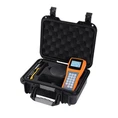
Let's talk about the different types of Brinell Hardness Machines we offer. We have the Hammer - hitting Brinell Hardness Tester. This is a portable option that's great for on - site testing. It's easy to use and can be a good choice for quickly getting a hardness reading on plastic materials, especially if you're working in the field.
Then there's the Digital Display Medium - sized Brinell Hardness Tester. This machine offers more precision and a digital display, which makes it easier to read and record the hardness values. It's suitable for testing a variety of materials, including plastics, in a laboratory or workshop setting.
And we also have the Automatic Medium - sized Brinell Hardness Tester. This one is fully automated, which means it can apply the load and measure the indentation more accurately and consistently. It's a great option for high - volume testing of plastic materials.
When testing plastics with a Brinell Hardness Machine, there are a few other things to consider. The surface finish of the plastic sample can affect the accuracy of the measurement. A rough or uneven surface might lead to an inconsistent indentation, so it's important to make sure the surface is smooth.
Also, the temperature can have an impact on the hardness of plastics. Plastics tend to become softer as the temperature increases. So, it's crucial to conduct the test at a consistent temperature to get reliable results.
In conclusion, yes, a Brinell Hardness Machine can be used to test the hardness of plastic materials, but with some adjustments. By using a lower load, choosing the right type of machine for the job, and taking into account factors like surface finish and temperature, we can get accurate hardness measurements for plastics.
If you're in the market for a Brinell Hardness Machine to test plastic materials or any other materials, we're here to help. We have a wide range of machines to suit different needs and budgets. Whether you're a small - scale workshop or a large - scale manufacturing facility, we can provide you with the right solution. Don't hesitate to reach out to us for more information and to discuss your specific requirements. We're always happy to have a chat and help you find the perfect Brinell Hardness Machine for your needs.
References:
- Standard test methods for Brinell hardness of metallic materials, ASTM E10 - 18.
- Plastics - Determination of hardness, ISO 2039 - 1:1987.